 UAE |
UAE |
 USA |
USA |
 UK |
UK |
 KSA |
KSA |
 Italy |
 Pakistan |
Your Luxury Piece is Just a Click Away!
Pakistan |
Your Luxury Piece is Just a Click Away!
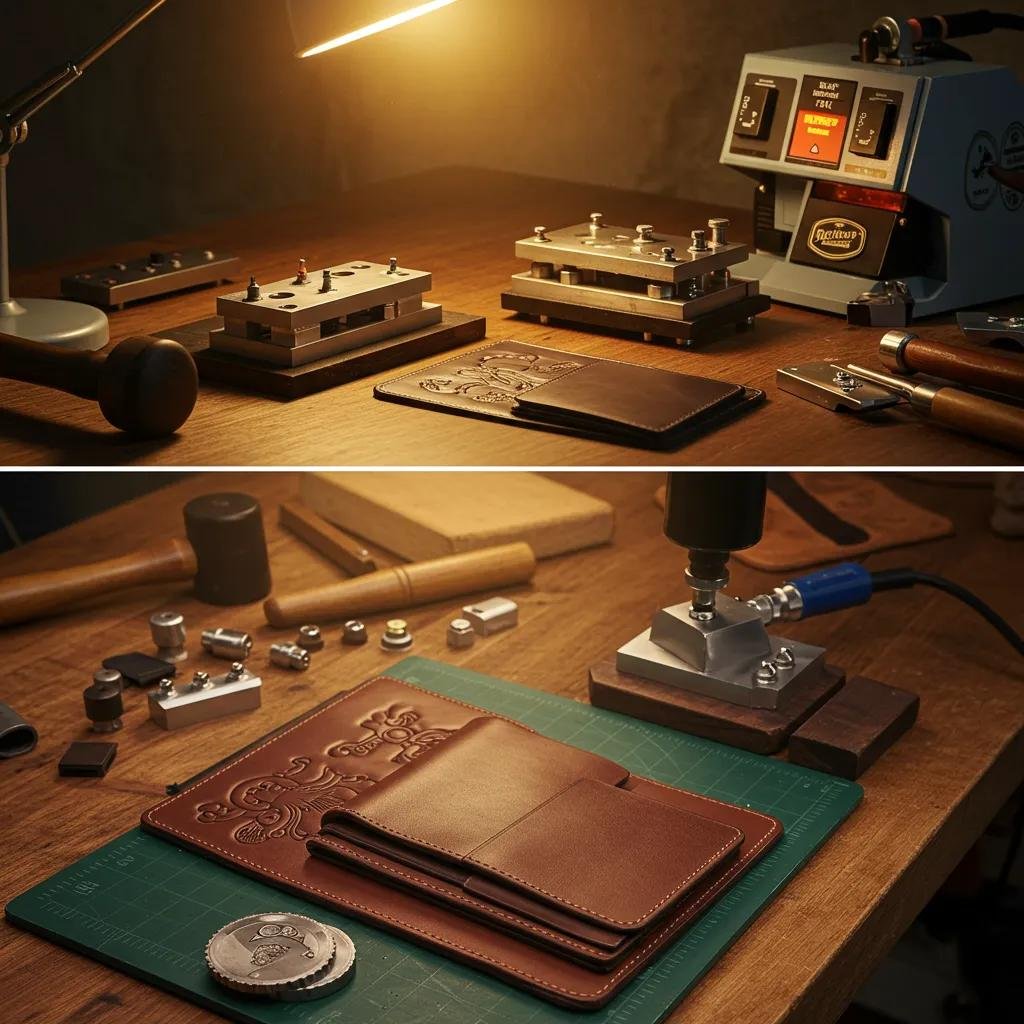
Leather embossing is one of the most rewarding skills any craftsperson can master. Whether you are a hobbyist in Texas or a seasoned professional, understanding the right methods transforms a plain piece of hide into a stunning, personalized work of art. At MSN Leathers, we believe that every piece of leather tells a story — and embossing helps you write it boldly.
In this guide, we walk you through the most effective methods for embossing leather, covering everything from classic leather tooling to modern heat embossing leather techniques. By the end, you will have a clear roadmap to choose the right method for your next project. So, let's dive in.
What Is Leather Embossing?
Simply put, embossing is the process of creating raised or recessed designs on leather surfaces. Craftspeople use pressure, heat, moisture, or specialized tools to permanently alter the texture and appearance of the hide. Unlike painting or dyeing, custom leather embossing modifies the very structure of the leather, resulting in designs that last for decades.
Leathercraft enthusiasts across Texas have embraced embossing because it adds genuine value to bags, belts, boots, wallets, and saddles. Furthermore, businesses use custom embossing to brand their products with logos, initials, or unique patterns that stand out in a competitive market.
Why Choose MSN Leathers for Your Embossing Projects?
Before we explore the techniques, let us tell you why Texans trust MSN Leathers. We supply premium full-grain and vegetable-tanned hides specifically selected to respond beautifully to leather stamping and embossing. Our materials are ethically sourced, professionally graded, and ready for every type of leathercraft project you have in mind. When you start with quality leather, every embossing method performs better.
Now, let's explore the methods.
Method 1: Traditional Leather Tooling
Leather tooling is the oldest and most respected form of leather craft embossing. This method involves using specialized metal leather embossing tools — called stamps or swivel knives — to carve and shape moistened leather.
How It Works
First, you dampen the leather with water until it reaches a firm but pliable state called "casing." Next, you use a swivel knife to trace your design onto the surface. Then, you drive metal stamps into the leather using a mallet. The result is a three-dimensional design carved directly into the hide.
Best Tools for Leather Tooling
- Swivel knife for outlining
- Beveler stamps for creating depth and shadow
- Background tools to add texture
- Camouflage stamps for floral and decorative patterns
Leather tooling delivers unmatched depth and artistry. Moreover, it allows complete creative freedom because you design every element by hand. This method is especially popular in Texas, where Western saddles, boots, and belts showcase elaborate floral and geometric patterns.
Tip from MSN Leathers: Always use vegetable-tanned leather for leather tooling. Chrome-tanned leather does not hold tool impressions well.
Method 2: Leather Stamping Techniques
Leather stamping is a faster alternative to full tooling. Instead of carving, you press pre-made stamps directly onto the leather surface to create repeated patterns or single impressions.
How Leather Stamping Works
You can perform leather stamping with or without moisture. For deeper impressions, dampen the leather first. Then, position your stamp on the surface and strike it firmly with a mallet. The stamp transfers its design instantly.
Popular Leather Stamping Techniques
- Single-impression stamping — ideal for logos and initials
- Pattern stamping — repeat a design across an entire surface
- Border stamping — create decorative edges on belts and straps
Leather stamping techniques work beautifully on wallets, keychains, and small leather goods. Additionally, businesses love stamping for branding purposes because it applies logos quickly and consistently.
Leather stamping is also a fantastic entry point for beginners. The learning curve is much gentler than full leather tooling, yet the results look highly professional.
Method 3: Heat Embossing Leather
Heat embossing leather uses a heated tool or press to permanently imprint a design into the surface. This method is especially popular for producing clean, sharp logos and text.
How Heat Embossing Works
A metal die or engraving plate is heated to the correct temperature. Then, the craftsperson presses it firmly against the leather surface. The heat softens the fibers, allowing the design to set permanently as the leather cools.
Types of Heat Embossing Equipment
- Hand-held heated tools — suitable for small, detailed work
- Hydraulic heat presses — used for large-scale production
- Rotary embossers — ideal for continuous patterns on straps and belts
Heat embossing leather produces extremely clean lines that are perfect for brand logos, monograms, and text. Furthermore, this method works on both vegetable-tanned and chrome-tanned leather, making it highly versatile.
At MSN Leathers, we recommend heat embossing for businesses that need consistent, repeatable results across large product runs.
Method 4: Foil Embossing
Foil embossing — also called foil-stamped leather — combines heat and metallic foil to create dazzling, eye-catching designs. This method adds both texture and color simultaneously.
How Foil Embossing Works
A heated die presses a thin layer of metallic foil onto the leather surface. The heat activates the adhesive on the foil, bonding it permanently to the hide. The result is a raised or flat design with a brilliant metallic finish.
Why Choose Foil Embossing?
Foil embossing is ideal for:
- Luxury product branding
- Wedding and gift items
- High-end wallets and handbags
- Corporate gifting
Foil stamped leather products instantly communicate premium quality. Gold and silver foils are especially popular, but modern craftspeople also use holographic and custom-colored foils for unique effects.
Custom leather embossing with foil is one of the fastest-growing trends in the Texas leather goods market. If you want your products to stand out on the shelf or online, foil embossing delivers maximum visual impact.
Method 5: Blind Embossing
Blind embossing creates a subtle, elegant impression without any ink, foil, or color. The design appears as a debossed or raised area in the leather itself — nothing more, nothing less.
How Blind Embossing Works
A metal die is pressed into the leather under high pressure. No foil, pigment, or heat is applied. The design becomes visible purely through the shadow and texture of the impression.
When to Use Blind Embossing
Blind embossing suits minimalist, sophisticated products. It is perfect for:
- Luxury journals and notebooks
- High-end cardholders
- Premium belt buckle areas
- Upscale handbags
Many luxury fashion brands prefer blind embossing because it conveys understated elegance. The absence of color forces the viewer to appreciate the craftsmanship itself.
Method 6: Dry Embossing
Dry embossing uses a stylus and a template to create raised designs without moisture or heat. While this method is more common in paper crafting, skilled leatherworkers apply it to thin, supple leathers with impressive results.
How Dry Embossing Works
Place a template or stencil beneath the leather. Then, use a rounded stylus to trace the design from the back side. The pressure pushes the leather into the template's recesses, creating a raised design on the front face.
Best Applications for Dry Embossing
Dry embossing works best on:
- Thin garment leather
- Soft lambskin
- Suede and nubuck surfaces
While dry embossing does not produce the depth of leather tooling, it offers a quick and accessible way to add texture and detail to delicate leather items.
Method 7: Engraving on Leather
Engraving takes embossing a step further by removing material from the leather surface rather than simply compressing it. Modern craftspeople use laser engravers to achieve incredibly precise, intricate designs.
How Leather Engraving Works
A laser engraver directs a focused beam of light at the leather surface. The beam vaporizes the top layer of the hide, burning the design permanently into the material.
Advantages of Laser Engraving
- Extremely fine detail and precision
- Works on virtually any leather type
- Ideal for photographs and complex artwork
- Fast turnaround for large production runs
Engraving combines beautifully with other methods. For example, many craftspeople engrave a base design and then apply foil embossing to highlight specific elements.
Essential Leather Embossing Tools
No matter which method you choose, you need the right leather embossing tools. Here is what every serious craftsperson should have:
- Swivel knife — for leather tooling and carving
- Metal stamping set — for leather stamping techniques
- Mallet or maul — provides the striking force
- Marble or granite slab — a firm work surface that absorbs impact
- Heat press or embossing iron — for heat embossing leather
- Foil transfer sheets — essential for foil embossing
- Beveler, pear shader, and camouflage stamps — core leather craft embossing tools
- Stylus set — for dry embossing
- Conditioner and finish — to protect your work
Investing in quality leather embossing tools pays off immediately. Better tools produce cleaner impressions, reduce fatigue, and last for years of heavy use.
Pro Tips for Better Embossing Results
Follow these professional tips from the MSN Leathers team:
- Always case vegetable-tanned leather before tooling or stamping. Proper moisture makes a massive difference in impression depth.
- Test your die temperature on a scrap piece before committing to your final project.
- Use consistent pressure — uneven striking creates uneven impressions.
- Clean your stamps regularly to prevent buildup that distorts impressions.
- Seal your work with a leather finish after embossing to protect the design and enhance longevity.
- Practice on scrap leather before working on your final piece, especially with foil embossing and heat embossing leather.
Why Embossing Elevates Your Leathercraft
Leathercraft is not just a hobby — it is a tradition. In Texas, leather goods carry deep cultural and personal meaning. Saddles pass from generation to generation. Belts mark milestones. Custom wallets become cherished gifts.
Custom leather embossing lets you put your signature on every piece you create. Whether you stamp a family brand onto a leather cuff or foil-emboss a company logo onto a portfolio, the result is a product that no one else can replicate.
Moreover, embossing adds real market value. Consumers consistently pay more for personalized, embossed leather goods than for plain alternatives. If you sell leathercraft products in Texas, mastering custom embossing is one of the smartest business decisions you can make.
Shop Premium Leather for Embossing at MSN Leathers
At MSN Leathers, we carry the finest vegetable-tanned, full-grain, and specialty leathers for every leather craft embossing project. Our Texas customers enjoy fast local delivery, expert guidance, and a wide selection of hides ready for leather stamping, tooling, heat embossing, and foil stamped leather projects.
Visit us today and discover why craftspeople across TX trust MSN Leathers for all their leathercraft needs.
Frequently Asked Questions
Q1. What is the best type of leather for embossing? Vegetable-tanned leather is the best choice for most embossing and leather tooling methods. It absorbs moisture evenly, holds impressions firmly, and ages beautifully. Chrome-tanned leather is suitable for heat embossing leather and foil stamped leather applications.
Q2. Can I use heat embossing on all leather types?
Heat embossing leather works on most leather types, including chrome-tanned and vegetable-tanned hides. However, always test temperature settings on a scrap piece first, because excessive heat can scorch or damage certain leathers.
Q3. How deep should I dampen leather for leather tooling?
For leather tooling, dampen the leather until it turns a slightly darker color and feels firm but flexible — similar to the texture of firm rubber. Over-wetting causes mushy impressions, while under-wetting causes cracking.
Q4. What is the difference between embossing and engraving?
Embossing compresses or raises the leather surface to create a design. Engraving removes material, cutting or burning the design into the surface. Both methods produce permanent results, but engraving typically achieves finer detail.
Q5. Is foil embossing durable on leather products?
Yes. Foil stamped leather is highly durable when applied correctly. The foil bonds permanently to the leather under heat and pressure. Proper sealing with a leather finish further protects the design from wear and moisture.
Q6. What leather embossing tools do beginners need?
Beginners should start with a basic leather stamping kit, a mallet, a marble work surface, and a swivel knife. These leather embossing tools allow you to practice fundamental leather stamping techniques without a large initial investment.
Q7. Can I do custom leather embossing at home?
Absolutely. Custom leather embossing and leather craft embossing are very accessible hobbies. With a basic set of leather embossing tools and quality leather from MSN Leathers, you can create professional-quality pieces at home.
Q8. What is blind embossing used for?
Blind embossing is used when you want a subtle, elegant design without color or foil. It is ideal for luxury goods, minimalist branding, and upscale accessories where understated sophistication is the goal.
Q9. How do I care for embossed leather products?
Clean embossed leather with a soft, damp cloth. Apply a quality leather conditioner regularly to keep the hide supple. Avoid prolonged exposure to direct sunlight or excessive moisture, which can fade or distort custom embossing over time.
Q10. Does MSN Leathers offer leather suitable for foil embossing in Texas?
Yes! MSN Leathers stocks a wide range of hides perfectly suited for foil embossing, leather stamping techniques, heat embossing leather, and all other leathercraft methods. Our Texas-based team is happy to help you choose the right leather for your specific project.
BACK TO JOURNAL