 UAE |
UAE |
 USA |
USA |
 UK |
UK |
 KSA |
KSA |
 Italy |
 Pakistan |
Your Luxury Piece is Just a Click Away!
Pakistan |
Your Luxury Piece is Just a Click Away!
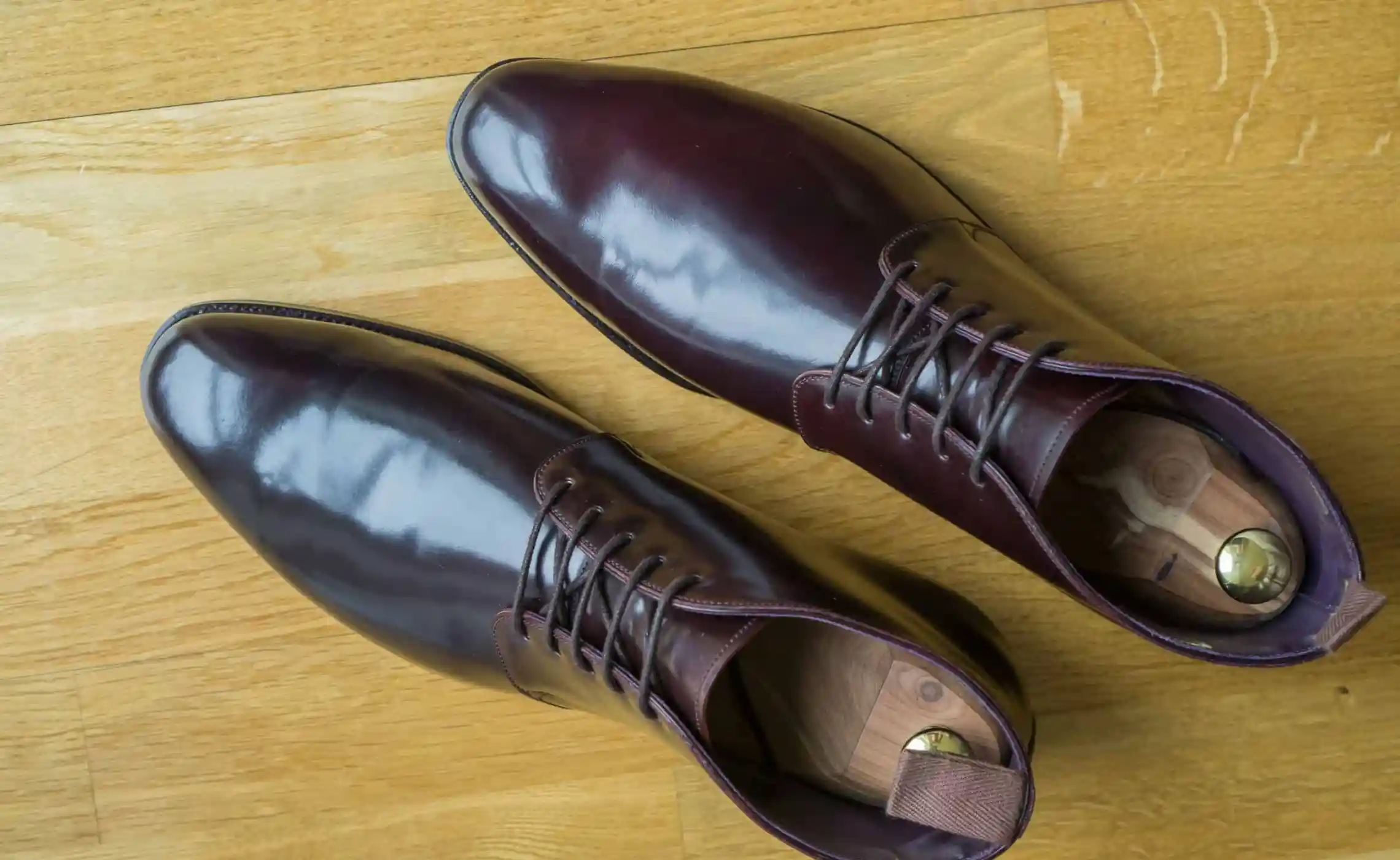
When it comes to premium footwear, few materials command the respect and investment that Shell Cordovan leather does. This exotic horsehide, sourced from the fibrous flat muscle of the horse rump, has become synonymous with luxury and longevity in the world of bespoke footwear and fine leather accessories. At MSN Leathers, we understand that owning a pair of white shoes crafted from genuine Shell Cordovan leather isn't just a purchase—it's a commitment to timeless style and uncompromising quality.
White shoes have become a wardrobe staple for modern professionals and style-conscious individuals alike. However, pairing them with the right accessories and maintaining their pristine appearance requires knowledge that most retailers simply don't provide. This comprehensive guide combines professional styling advice with insider maintenance secrets, ensuring your Shell Cordovan investment remains fresh, lustrous, and architecturally perfect for years to come.
Whether you're considering your first Shell Cordovan purchase or you're already a devoted enthusiast questioning how to care for Shell Cordovan properly, this guide answers every question—including whether Shell Cordovan is worth the price and how it compares to alternatives like Horween Leather Co versus Shinki Hikaku tannery editions.
What Makes Shell Cordovan Leather Exceptional?
Shell Cordovan leather is fundamentally different from conventional full-grain leather. While standard leather comes from the top layers of the hide, Shell Cordovan is harvested exclusively from the dense, fibrous layer beneath the subcutaneous layer of the horse rump. This anatomical specificity means that only a small section of each hide yields usable Cordovan—typically enough for just one pair of shoes or a luxury wallet.
The magic lies in the material properties. Unlike standard leather that develops creases over time, Shell Cordovan exhibits a non-creasing character that distinguishes it immediately. Instead of wrinkling, this vegetable tanned leather develops a lustrous, self-polishing finish that deepens through natural oxidation. Over months and years, you'll witness the mirror shine evolve naturally without aggressive polishing, creating a patina that tells the story of your wear.
Horween Leather Co, the legendary Chicago tannery founded in 1905, remains the gold standard for American Shell Cordovan production. Their hot stuffing technique and hand-glazed finishing process have remained largely unchanged for over a century, creating that distinctive rich ripple texture (never creases) that collectors recognize instantly. Similarly, Shinki Hikaku from Japan and Roccado Tannery represent alternative sources, each bringing nuanced tonal qualities and finishing characteristics to the table.
Why Shell Cordovan Doesn't Crack—The Science Behind Durability
The durability of horsehide leather is rooted in its unique tanning process. Shell Cordovan undergoes a protracted vegetable tanning procedure in tanning pits—a method that takes months compared to chrome tanning's days. This leisurely process allows tannins to penetrate uniformly throughout the material, creating a substrate that becomes stronger and more supple with age rather than brittle.
The equine hide's natural density and fiber structure means Shell Cordovan resists the structural failure that plagues lower-quality leathers. The non-creasing property isn't merely aesthetic—it reflects the leather's ability to distribute stress evenly across its surface rather than concentrating pressure into permanent fold lines. This is why a five-year Shell Cordovan wear test consistently shows materials that look nearly new, while standard leather shoes of identical age show pronounced creasing and deterioration.
Artisanal craftsmanship during the tanning process plays a critical role. Hand-glazed finishes, applied with tallow and waxes by experienced tanners, seal the leather's surface and provide natural water resistance. This creates an imperious barrier against moisture penetration while allowing the material to breathe—something artificial sealants cannot achieve.
Styling White Shoes with Shell Cordovan Accents
White shoes have transcended their athletic origins to become a cornerstone of professional and casual styling. When your white leather footwear incorporates Shell Cordovan elements—whether through a contrasting heel counter, vamp binding, or complementary Shell Cordovan accessories—you're creating a sophisticated layering opportunity that elevates your entire ensemble.
Professional Styling: Pair white Shell Cordovan loafers or oxfords with charcoal or navy suiting for a refined aesthetic that reads "confident without trying." The crisp white base grounds the outfit while subtle Cordovan accents add depth and visual interest. This combination signals attention to detail—crucial in finance, law, and executive roles.
Casual-to-Smart Casual: White canvas or leather sneakers with Shell Cordovan leather watch straps create an unexpected but harmonious pairing. The monochromatic shoe lets your wrist accessory become a statement piece. Color 8 Shell Cordovan (a deep reddish-brown) pairs beautifully with white footwear in summer settings, while oxblood or burgundy Shell Cordovan tones work exceptionally in autumn and winter wardrobes.
The Luxury Wallet Partnership: If your white shoes are the visual anchor, complement them with a matching or coordinated Shell Cordovan wallet. Horween's Shell Cordovan in signature colors like cigars, whiskey, or oxblood creates visual continuity without matching exactly—a hallmark of sophisticated dressing.
Seasonal Transitions: White shoes naturally bridge seasons. In spring and summer, they pair with cream, ecru, and pastel Shell Cordovan accessories. As temperatures drop, transition to deeper Shell Cordovan tones and richer textures that suggest warmth without requiring heavy footwear.
Complete Cordovan Care: From Daily Maintenance to Deep Restoration
Understanding how to care for Shell Cordovan separates casual owners from dedicated enthusiasts. The material's self-polishing nature means it requires less aggressive intervention than conventional leather, but proper maintenance is still essential for longevity.
Daily & Weekly Care: Begin with a horsehair brush—specifically designed for leather care rather than general-purpose alternatives. Brush your Shell Cordovan shoes gently after each wear to remove surface dust and debris. This single step prevents grit from embedding into the leather and causing micro-abrasions. Pay special attention to creases and textured areas where particles accumulate.
For white Shell Cordovan shoes, a soft microfiber cloth removes dust and maintains the visual clarity of the material. Never use water without purpose; Shell Cordovan's vegetable tanned nature means it responds slowly to moisture, but careless saturation can cause spotting.
Monthly Deep Cleaning: Once monthly, use Saphir Médaille d'Or products—the preferred choice among genuine Cordovan enthusiasts worldwide. Their leather cleaner gently removes accumulated grime without stripping the natural patina. Apply with a soft cloth using circular motions, then wipe with a damp (not wet) cloth to remove cleaner residue.
The legendary deer bone polishing technique comes next. Traditional polishers use actual bone tools to gently buff the surface, encouraging the leather's natural oils to rise and create that signature mirror shine. Modern alternatives like specialized Cordovan polishing cloths achieve similar results without the authentic tool element.
Conditioning & Restoration: Shell Cordovan doesn't require frequent conditioning because its natural oils remain abundant throughout the leather's lifespan. However, annually—particularly in dry climates—apply a minimal amount of quality leather conditioner. Overconditioning creates a dull, greasy appearance that contradicts the lustrous finish you're cultivating.
If your white Shell Cordovan shoes develop scuffs, don't panic. Minor surface marks often disappear with patient polishing using a Saphir brush and cloth. Deeper scuffs may require professional restoration from a skilled cobbler familiar with Shell Cordovan's unique characteristics.
Shell Cordovan Patina Over Time: Why It's Worth the Investment
One of the most compelling reasons Shell Cordovan justifies its premium pricing is the patina development process. Unlike standard leather that simply ages and deteriorates, Shell Cordovan undergoes an aesthetic evolution that many collectors find profoundly satisfying.
Within the first three months of regular wear, you'll notice the leather beginning to develop depth. Light reflects differently from the surface as microscopic wear patterns establish themselves. The aubergine hues (in burgundy and oxblood selections) or honey tones (in lighter colors) become more pronounced through natural oxidation. By the six-month mark, the transformation becomes undeniable—your shoes develop a personality that reflects your unique wearing patterns.
This patina process is completely natural and requires no intervention. You're not applying stains or artificial finishes; you're simply allowing the leather's inherent characteristics to express themselves through time. This is why comparing genuine Shell Cordovan versus imitation Cordovan reveals such stark differences—true Cordovan develops character, while fakes remain static and eventually deteriorate.
Is Shell Cordovan Worth the Price? A Realistic Assessment
This question deserves an honest answer: yes, but with important caveats. Shell Cordovan premium pricing reflects multiple factors: the scarcity of suitable horse hides, the extended tanning timeline, the skilled labor involved, and the material's unmatched longevity.
A quality pair of white Shell Cordovan oxford shoes or loafers from a reputable maker typically ranges from $400 to $800. While this seems steep compared to $100 dress shoes, consider the durability context. A genuine Shell Cordovan shoe, properly maintained, remains structurally sound and visually appealing for 15-20+ years of regular wear. A conventional leather shoe typically shows significant deterioration within 5-7 years.
When you divide the total cost by years of wearability, Shell Cordovan often proves more economical than repeatedly replacing cheaper alternatives. Moreover, the aesthetic satisfaction of owning a material that improves with age adds intangible value that pure economics cannot capture.
For dress shoes, luxury wallets, and watch straps, Shell Cordovan represents the pinnacle of leather craftsmanship. If budget permits and your lifestyle justifies regular use, the investment pays dividends in satisfaction and durability that few materials can match.
Shell Cordovan Watch Straps Review: Pairing Horology with Leather Excellence
A Shell Cordovan watch strap deserves special attention as a styling element, particularly when coordinating with white footwear. Unlike fabric straps that fade and degrade, or standard leather straps that require frequent replacement, Cordovan watch straps develop character alongside your timepiece.
High-quality Shell Cordovan straps sourced from Horween Leather Co or Shinki Hikaku offer several advantages. First, the non-creasing property means the strap maintains its structural integrity around the wrist curve for decades. Second, the self-polishing characteristic means your strap develops a subtle gleam with wear—synchronizing beautifully with the patina on your shoes.
When styled with white shoes, a Color 8 Shell Cordovan strap creates a sophisticated wrist-to-foot visual connection. The leather develops warm undertones over months that complement lighter footwear without matching exactly—achieving the "coordinated but intentional" aesthetic that defines refined dressing.
Durability testing shows Shell Cordovan watch straps outlast even premium alternatives by significant margins. Rather than replacing straps annually, many Cordovan enthusiasts report using the same strap for 5-10 years with nothing more than routine care.
Horween vs. Shinki Hikaku: Understanding Tannery Differences
Sourcing authentic Shell Cordovan means understanding the tannery landscape. Two names dominate the premium market: Horween Leather Co (American) and Shinki Hikaku (Japanese), with Roccado Tannery offering a third-tier alternative.
Horween Leather Cooperates using traditional vegetable tanning methods virtually unchanged since 1905. Their hot stuffing technique and hand-glazed finishes create a distinctive rich ripple texture (characteristic of authentic Cordovan) and warm, approachable color palettes. Horween Shell typically develops a more pronounced amber undertone during patina development. The leather feels slightly softer initially and breaks in relatively quickly.
Shinki Hikaku represents Japanese tanning precision. Their vegetable tanned process emphasizes color clarity and consistency. Shinki Shell tends toward brighter, more saturated initial colors (particularly striking in burgundy and oxblood) and develops a sharper, more dramatic patina arc. The leather feels firmer initially but rewards patience with an increasingly refined aesthetic.
Roccado Tannery (Spanish heritage) offers a middle path—quality exceeding mass-market alternatives but lacking the refinement and consistency of Horween or Shinki. Roccado works well for those prioritizing price without completely sacrificing authenticity.
For white shoe styling, Horween's warmer palette tends to create more harmonious combinations, while Shinki's color intensity offers bolder visual statements. Neither choice is objectively superior—selection depends on personal aesthetic preferences and the specific color palette of your white footwear.
How to Identify Genuine Shell Cordovan vs. Imitations
Not all "Cordovan" leather is authentic. The market includes numerous imitations that lack the characteristic properties of genuine Shell Cordovan.
Authentic Shell Cordovan exhibits several unmistakable markers:
Visual Inspection: Genuine Cordovan displays a non-creasing, rich ripple texture (from the natural muscle fiber pattern of the horse rump). Creases indicate imitation leather. The surface should show characteristic aubergine or warm amber hues (depending on color) rather than uniform, artificially perfect tone.
Patina Development: Place your hand on a genuine Shell Cordovan shoe and slide it gently across the surface. The leather should feel slightly sticky or tacky—a result of the tallow and wax used in hand-glazing. After several months of wear, the surface should develop a mirror shine without any conditioning or aggressive polishing.
Tannery Marks: Check for tannery markings or documentation. Horween-tanned Cordovan often includes subtle marks indicating the tannery. Reputable makers include this information in product descriptions or packaging.
Price Reality: Authentic Shell Cordovan carries a price floor. If white shoes or accessories claim to be Shell Cordovan but cost under $300, skepticism is warranted. The material economics don't support significantly lower pricing for genuine products.
Vendor Reputation: Purchase from established retailers specializing in fine leather goods. MSN Leathers and similar brands prioritizing quality over volume will always stock genuine Cordovan and provide complete sourcing transparency.
Conclusion: Shell Cordovan Leather as a Lifestyle Investment
Shell Cordovan leather represents more than a material choice—it's a commitment to quality, longevity, and aesthetic refinement. When paired with white shoes styled thoughtfully across professional and casual contexts, authentic Cordovan elevates your entire wardrobe while rewarding your investment with improved appearance over time.
The durability of horsehide leather, combined with the non-creasing characteristics and self-polishing nature of properly tanned Cordovan, creates a material that few alternatives can match. Understanding how to care for Shell Cordovan properly—through gentle brushing, periodic cleaning with Saphir Médaille d'Or products, and patient patina development—ensures your investment appreciates in both aesthetic and emotional value.
Whether you're exploring Shell Cordovan watch straps, luxury wallets, or bespoke footwear, the principle remains consistent: genuine Shell Cordovan from respected tanneries like Horween Leather Co and Shinki Hikaku develops character that synthetic or lower-grade alternatives simply cannot achieve. The question isn't whether Shell Cordovan is worth the price—it's whether you're prepared to appreciate a material that improves with age and use.
At MSN Leathers, we craft premium leather goods with timeless style and durable quality. Our mission is to blend sophistication with functionality for modern living. Explore our curated collection of Shell Cordovan accessories and footwear, and discover how genuine craftsmanship elevates everyday style into something genuinely extraordinary.
FAQ Section (Optimized for Google "People Also Ask")
Q: How to care for Shell Cordovan?
A: Brush gently with a horsehair brush after each wear, clean monthly with Saphir Médaille d'Or products, and condition minimally (annually or less). Avoid water saturation and aggressive polishing. The leather's natural oils sustain itself beautifully with minimal intervention.
Q: Is Shell Cordovan worth the price?
A: Yes, for those valuing longevity and aesthetic development. A $500 pair of Shell Cordovan shoes lasting 15+ years proves more economical than replacing $100 shoes every 5 years. The material also develops a beautiful patina reflecting your unique wear patterns—an intangible benefit of genuine craftsmanship.
Q: What's the difference between Shell Cordovan from Horween vs. Shinki Hikaku?
A: Horween (American) uses traditional hot stuffing for a softer, warmer aesthetic with amber undertones. Shinki (Japanese) emphasizes color clarity and consistency with sharper, more dramatic patina development. Both represent authentic vegetable tanning; choice depends on personal preference.
Q: Why doesn't Shell Cordovan crease like regular leather?
A: Cordovan is harvested from the dense fibrous muscle layer beneath the subcutaneous layer—structurally different from standard top-grain leather. This density and fiber orientation distribute stress evenly rather than creating permanent fold lines, maintaining architectural integrity through years of wear.
Q: What does "Color 8 Shell Cordovan" mean?
A: Color 8 is a specific designation (primarily Horween) indicating a deep reddish-brown shade—somewhere between oxblood and mahogany. The numbering system helps buyers identify consistent color palettes across product lines and production runs.
Q: How long does Shell Cordovan patina take?
A: Initial patina development becomes visible within 3 months of regular wear. Substantial, satisfying character emerges around 6-12 months. The patina process continues for years—some collectors report their Shell Cordovan pieces becoming noticeably more beautiful after 5+ years of use.
BACK TO JOURNAL